
Awkward project
Tree belts – how to get great results
· Tree belts are of great value in supporting farming and lifestyle aspirations
· Good preparation makes a big difference especially in tough seasons
· Selecting the right trees and shrubs for your situation
· Need to think about weed control and bushfires
· Understanding your land helps to ensure great outcomes
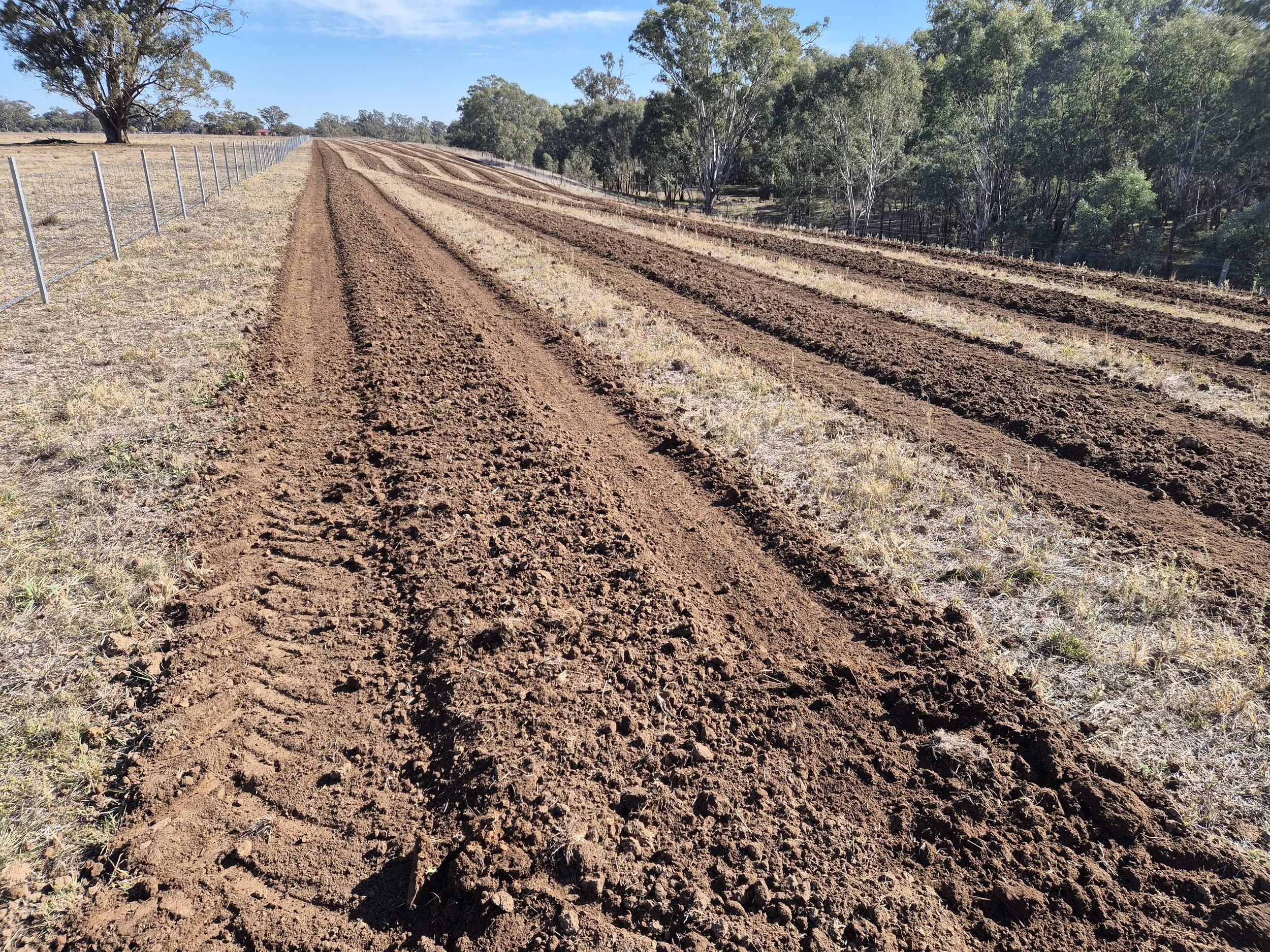
Tree belts are a great asset to any small property and our environment. They encourage biodiversity by attracting birds, reduce wind speed increasing moisture retention, and in time become shade for stock, reduce soil erosion and just look good!
However poor ground preparation limits the ability of trees and shrubs to thrive and get ahead especially in tough years. Selecting the right trees and shrubs plus maximizing the ability to capture and retain water makes a difference. Having a plan to manage competing weeds with easily helps to reduce ongoing maintenance and fire hazards. There are lots of areas on a small farm where a few trees are a real winner if you set them up properly. Happy trees !!
Tree belts area an asset from an environment, farming and lifestyle perspective.
Planting tree belts has been an Australia passion for a long time. For many years we have had the government funded Landcare organisation and a variety of government grants to support their establishment.
There are a lot of good environmental reasons for establishing tree belts. For small landholders there are some other perspective worth considering.
· There are tucked away parcels of land which are tricky to use from a small farm perspective. Tight corners, steep areas and places which you can’t easily access. Plus, there are areas which you just don’t have the time to deal with or develop…. because of your” day job” and weekend family busyness.
· Tree belts are a great way to set your home and rural lifestyle nest away from noisy roadways, close neighbor’s and unsightly “structures” adjacent to your place.
· And with the selection of the right trees and shrubs, you can attract biodiversity elements (birds, insects, bees) that can complement your garden and pest control efforts.
Plus, there is a steadiness tree belts can bring to a lifestyle of living in the country.
Good preparation makes a big difference
When you look at tree belts in your local area, it’s hard to identify any that look like there a shocker. So why should be concerned about doing good preparation… no lets say “great” preparation?
In good years, with good rain and a bit of luck, your right. We may be “over-thinking” about doing good preparation. Most natives’ species will grow in a good year about a meter per year.
The problem is that with a changing and drying environment those good normal years are getting further apart. Best practice preparation practices can make a big difference.
Things like-:
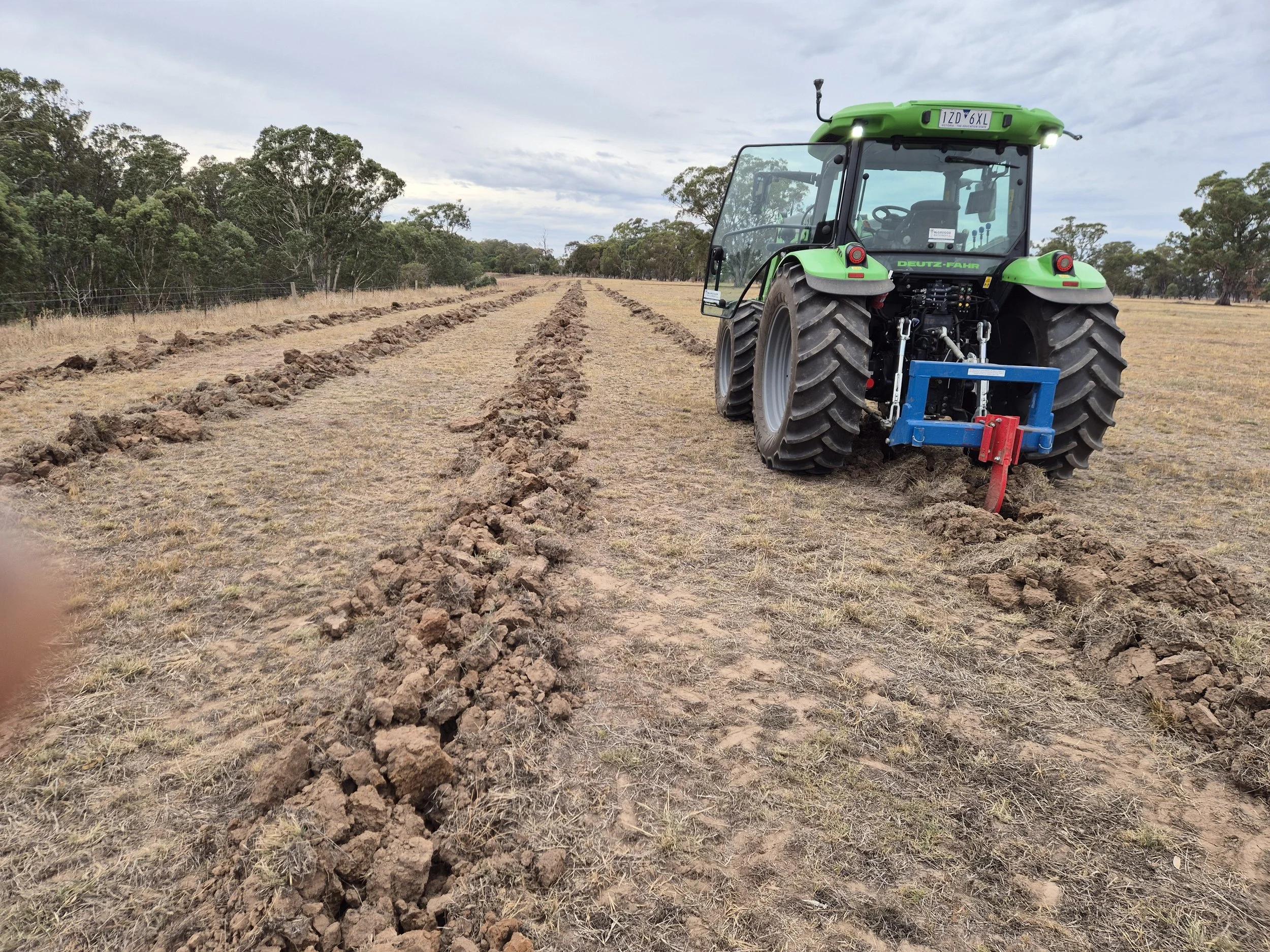
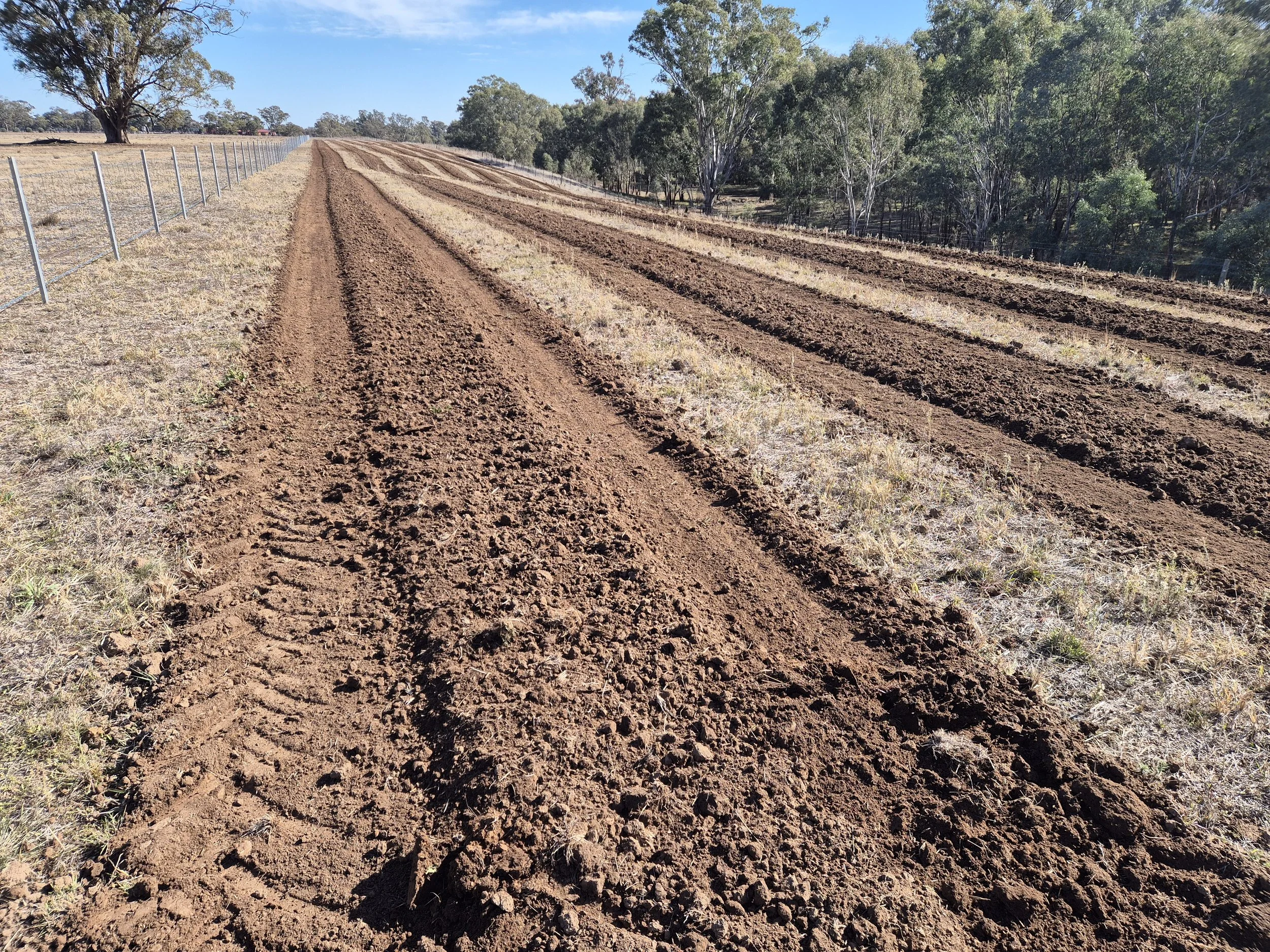
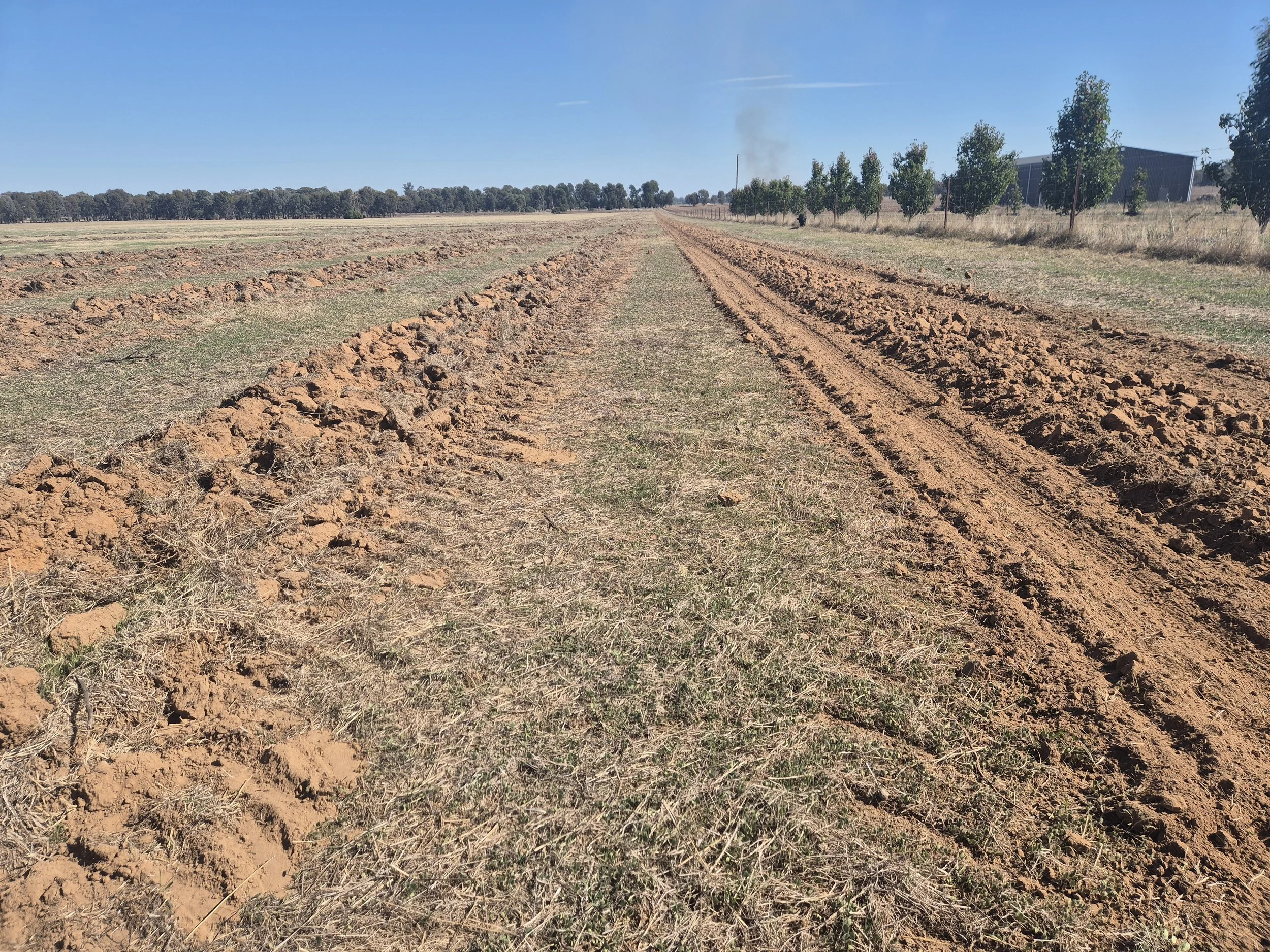
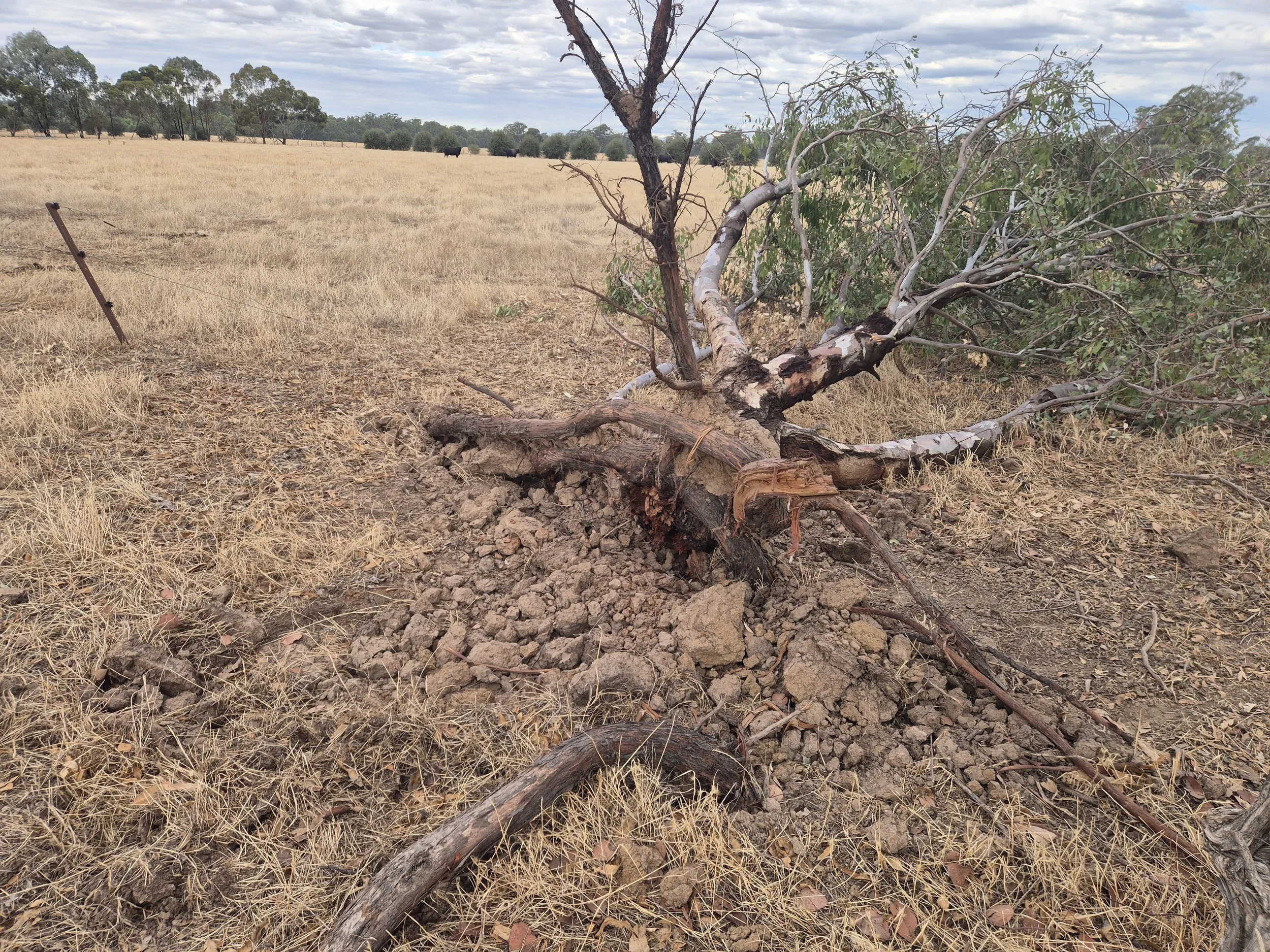
· Deep ripping – typically this should be down to 0.5 m and be completed when the ground is dry. You fracture the ground creating cracks for water retention and root growth. Also, double ripping 0.3m apart is a winner in that you double the water storage area under the plant. A common mistake is single line ripping too shallow, and doing this work just before planting when the ground is softer, resulting in limited fracturing of the subsoil. Sadly, you’ll see trees blow over because their roots are not anchored down far enough into the soil going to the ground water stored deep below.
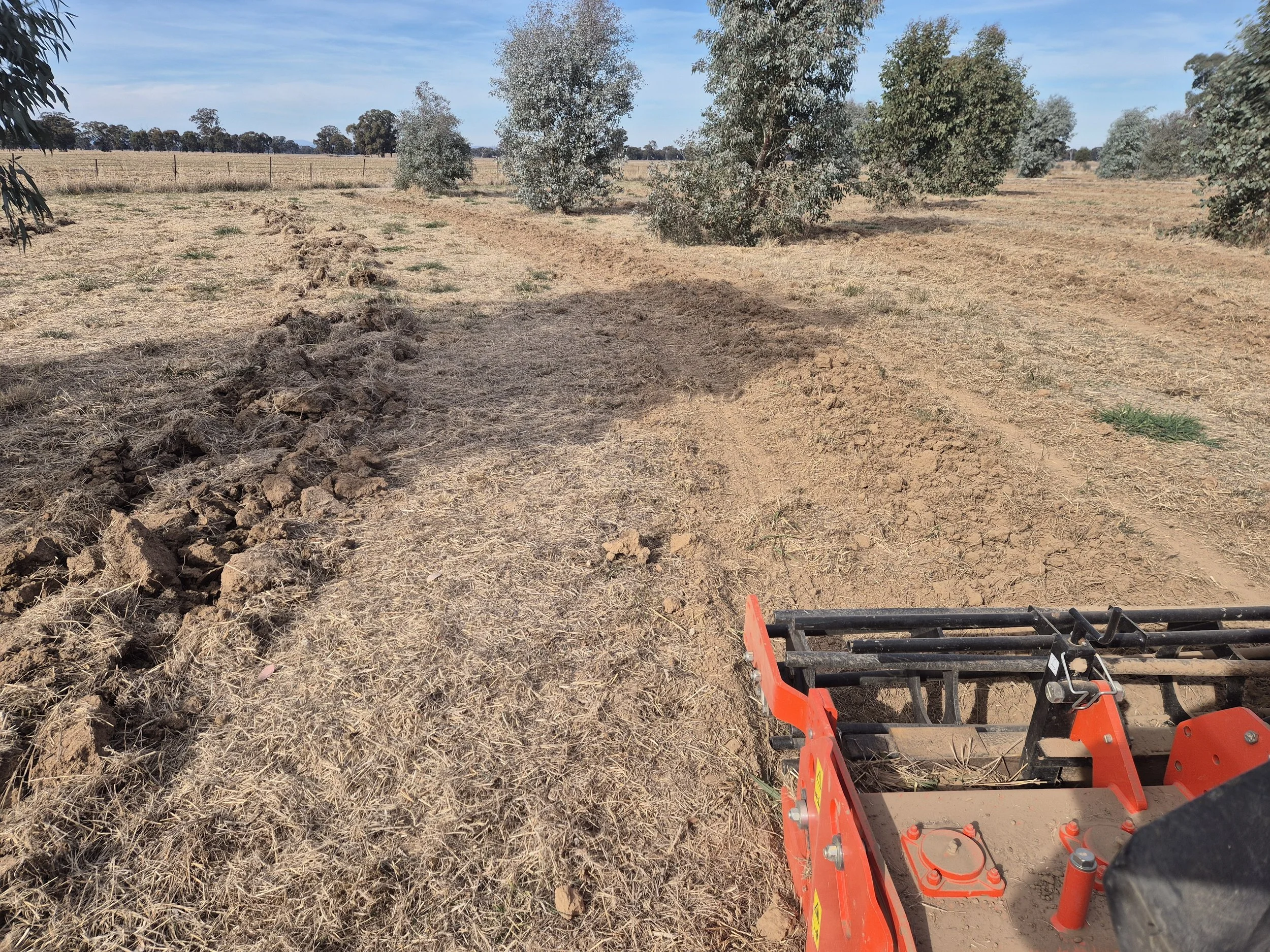
· Creating a molded seedbed – if you get the ripping right, you’ll see lots of big clods along the rip line where you want to plant your trees/shrubs. Best practice is to power harrow to break down these clods and create a molded seedbed for you to plant into. The slight raising of the ground that’s created acts to slow water runoff allowing water to soak down into the subsoil extending its availability to the plant. Conversely, in a really wet year your plant primary roots are between the two rip lines, and being slightly raised, reduce the “death by wet feet” problem.
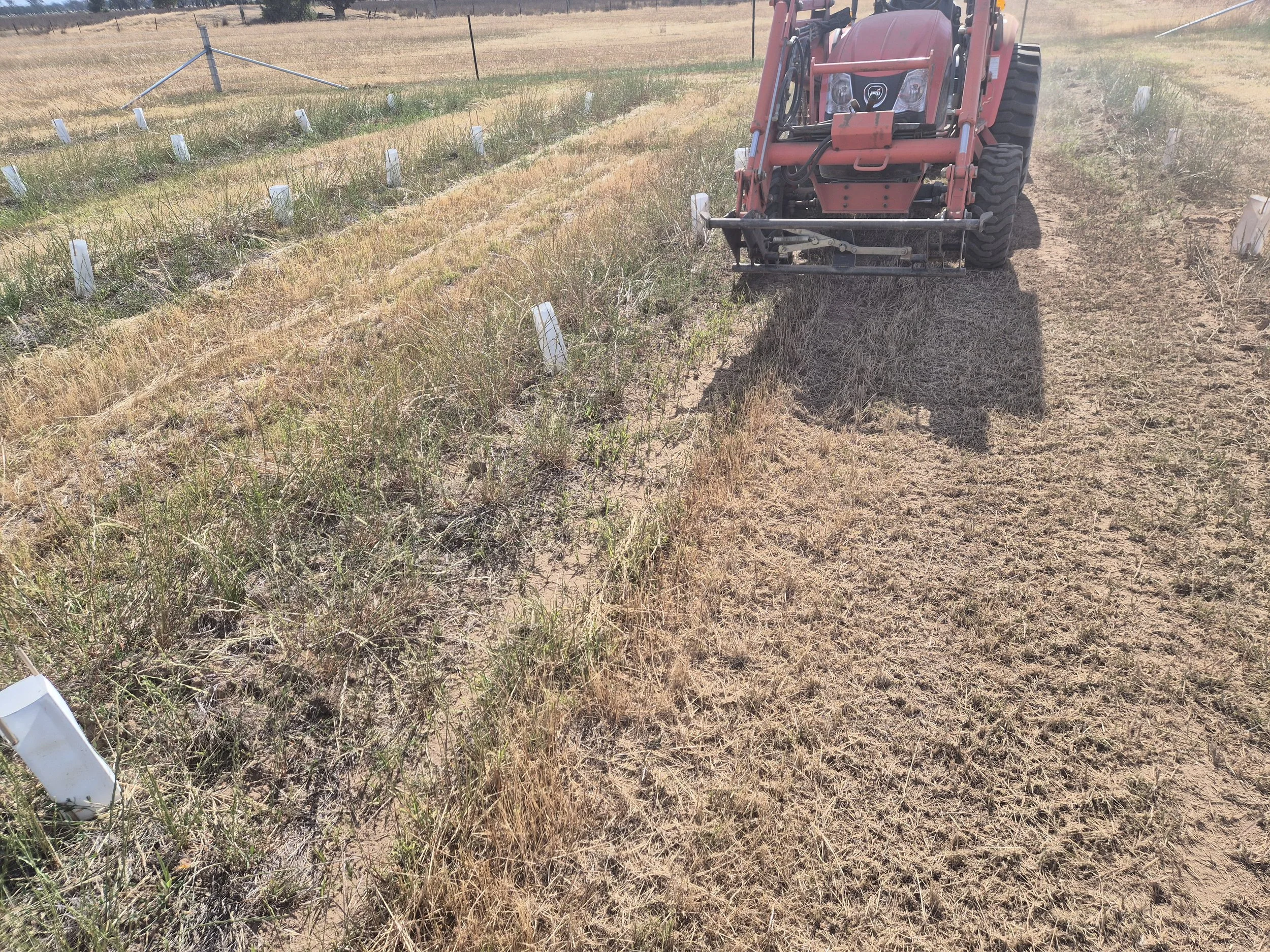
· Some thinking about access between tree lines regarding the size of your mower is a good tip. If you plan to mow to keep the weeds down and reduce fire hazard, it’s good to get your tree line spacings so that you can get around the area without having to do needless overlaps to cover half deck cuts.
·
There are lots of things to consider: -
· Are you planting to lower wind speed following the tree height sequence of – low shrubs - then higher trees - followed by lower plants ….as a posture sequence? Lots of info on the www. on this topic.
· Or maybe it is about attracting natures biodiversity to your place, things like bees, insects and bird attracting plants?
· Are you after some screening plants to reduce sound or dust from a roadway, or establishing some visual privacy around your home?
· Maybe growing some food generating trees or scrubs for you animals or your kitchen, things like Tagasaste and Saltbush?
· Or maybe you just always liked a particular plant/tree and that’s just OK.
A good way forward is to do your internet research, look around your local area and observe what plants and scrubs are doing well and look good. Talk to you local Landcare group or nursery. And never forget to follow a good whim or idea. Give your heart some freedom to have a go.
Understanding your land helps to ensure great outcomes
A thing to remember is to really look at your land and the trees and shrubs around you . the land is aways showing you what is works well. Plant along the contours of your land. If you’re trying to manage some erosion, do more than plant trees and shrubs to limit soil loss.
Work upstream of the problem area to reduce the severity of the erosion. Pivot to local tried and tested species to underpin your tree belt and add any individual preferred plants into the mix. If you have a weed problem in that area, it won’t go away just because you have planted some trees. Keep on top of those pesky weeds in the first few years. Get your trees and shrubs growing at pace so that they can out compete your weed problems. And if some species are not thriving, don’t be shy about trying new plants.
Enjoy your tree belts!